
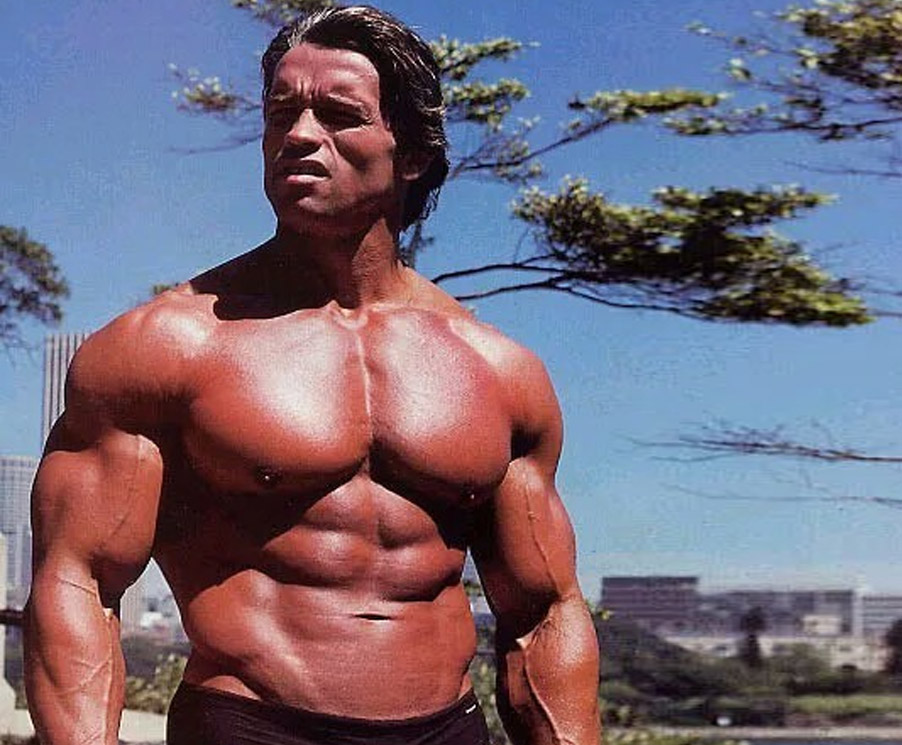
The gymnasium (from gymnós meaning naked) is not meant to be a past-time club for hobbyist fitness. It is an essential institution in the public life of a healthy society. It is essential to everyone, and in classical times It was a place for socializing and intellectual pursuits as well as for training.
When Alexander conquered the world he left in his wake captured cities populated with Hellenistic bathing facilities, palaestra (devoted to wrestling, boxing and ball games) and gymnasiums were a civic triumvirate of the patriarchal culture (along with libraries). In these gymnasiums the conquered peoples, some with bitterness, some with gratitude, trained their bodies and their minds beneath marble statues of Herakles. Training was conducted in the nude, a practice which was said to encourage aesthetic appreciation of the male body, and to be a tribute to the gods. While the concept frightens us, certainly training nude ups the ante in terms of competitive aesthetics, dedication, and overcoming self-consciousness and personal frailties. The Greek concept of heroic nudity was above all about honesty.
If we desired to more accurately recreate this institution in its true form, we must firstly consider the gymnasium space itself, as it must be perfectly executed and not lacking in aesthetics or any considerations conducive to a correct mindset for the trainees. Essentially concerns which are esoteric must be applied, organically, and while it is foreign to our quantitative finance-capital ears to think esoteric aesthetics have anything to do with physical training, it is in fact no small concern whatsoever. The aristocratic virtue requires buildings made from stone adorned with dignifying statuary, weights and machines built from wrought iron and wood. Weighted bags and balls of deeply grooved leather (never plastic). The music must be energizing and acceptably masculine, and there must be included classical oration, bardic poetry, and combat training.
It must be thought of as a school, not a hobby.
As in time of old, there needs to be gymnasiarchs (public sports officials who direct the schools) as well as gymnastai (teachers, coaches, and trainers). As did the classical Greek gymnasiums, ours must also hold lectures and discussions on philosophy, literature, and music, and each gym should have a private library.
Our gymnasium, like the classical, must not neglect any aspect of training, neither the physical, the mental, the aesthetic, nor the correctly spiritual. In this regard, this should be our attitude: If you’re too intellectually lazy to read the works of Plato, Plotinus, Proclus, Xenophon, Homer, Virgil, Iamblichus, Plutarch, Gemistus Pletho, Lucretius, Sallust, Marcus Aurelius, Seneca, and other classical thinkers, you must leave the gymnasium. This is how you separate the academic careerist from a potential patriarchal wizard. If you’re too physically lazy to exercise your whole body, too frightened to practice martial arts and fencing, you must leave the gymnasium. An esoteric gymnasium should be about acquiring the fire of the dragon, the thunderbolt of Jupiter, and the gold of the alchemist, so the members of the gymnastai can purge away their petty fears, and the trainee can acquire the wisdom of Olympus. The wisdom of struggle and self-betterment. Life is about the intensity of Jupiter’s thunderbolt.
Only adult male citizens were allowed to use the classical gymnasia, and so in our recreation ladies will have their own version suitable to them. While it is energizing to see ladies working out in coed gyms, and can even add some percentage to lifts and to stamina via muse inspiration, the long-term effect in practice has proven to be the feminization of the training space, with infantile aesthetics and loud estrogenous girly-music pumping constantly, instead of invigorating hard rock or similar, forcing most men to wear headphones. This energy loss and disparity of taste likely far outweighs the boost from seeing yoga-pants feminine curves on the treadmill, as being persecuted by intellectually insulting modern pop music causes depression and gain-loss. For this reason, the ladies require their own gym, something they often seek anyways so that they can sassily claim to wish freedom from the ‘male gaze’.
Plato (the father of philosophy) laid it out quite clearly: the ideal philosophical education included music, gymnastics, mathematics and dialectics, and this was in order to ensure that the three components of the soul (the appetite, the spirit, and the reason) were in harmony. Harmony being the key concept. By that we mean that it is of paramount importance that these three are not out of balance, that one does not supersedes another, and none remain neglected. Thereby the same is true of the four pillars of education. The threat of bad philosophy arises when people focus solely on dialectics without attending the gym. or music without studying math (ratios). If a philosophy lacks the motivation to be adventurous, to improve athletic skills, to increase artistic creativity, to expose practitioners to danger, or to see the world in a poetic and mystical manner, it is derivative, redundant noise. It lacks the primal inspiration, the catalyst for aspiring to moral and intellectual heroism, physical courage, or divine asceticism.
There is no ‘difference’ between training the physical and the mental, as there is no difference between art and science, or culture and religion. A human life is wasted when it is not spent in self-betterment.


